Why businesses are investing Growth Systems For B2B for scalability
The Future of B2B: Using AI Automation to Drive Success
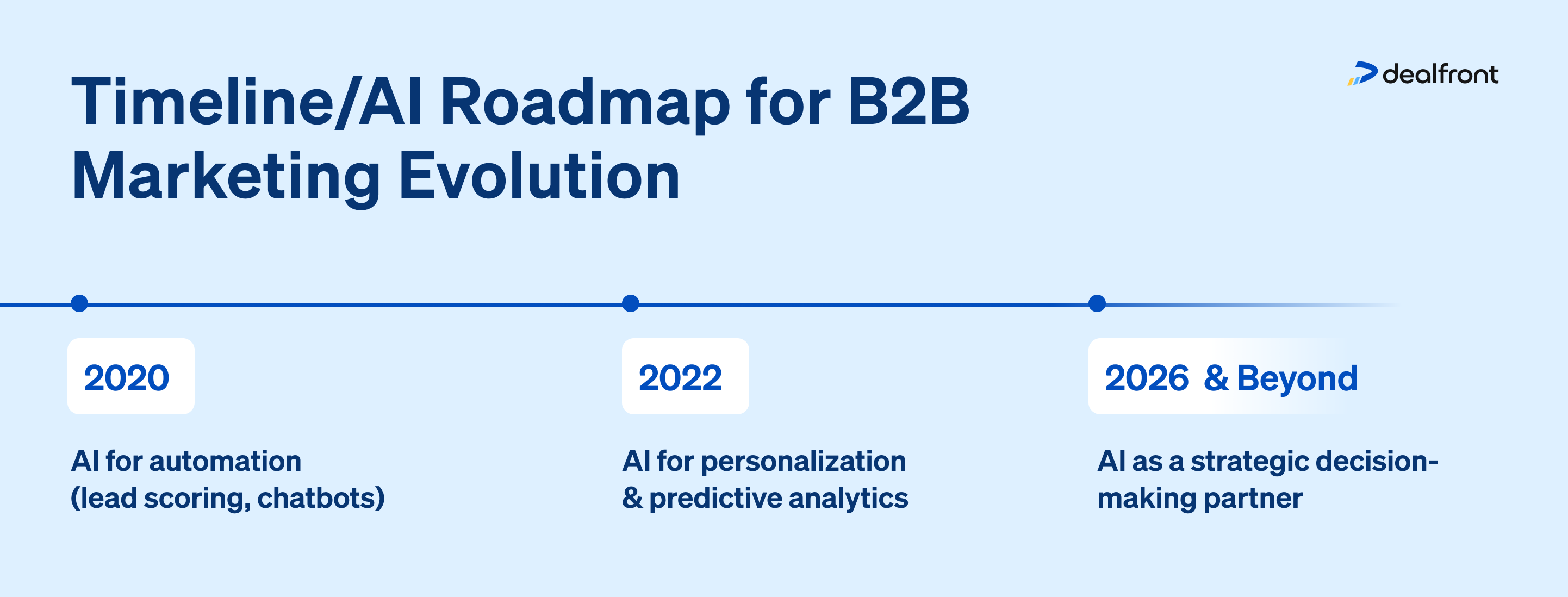
The landscape of B2B is shifting as firms significantly turn to AI automation for tactical advantage. This makeover assures to boost effectiveness and client engagement via innovative technologies. However, the assimilation of these tools is not without its difficulties. Comprehending how services can navigate this evolving surface will be important for future success. What factors will identify the effectiveness of AI in this industry? The solutions may redefine typical organization designs.
Recognizing AI Automation in B2B
As services progressively look for effectiveness, understanding AI automation in B2B ends up being essential. AI automation describes making use of man-made knowledge technologies to improve and enhance company procedures. In the B2B industry, this entails the combination of AI tools to take care of jobs such as data evaluation, client communications, and supply chain operations. By leveraging machine knowing and natural language handling, firms can improve precision, lower human mistake, and speed up decision-making (Business Process Automation). Additionally, AI automation facilitates the handling of huge quantities of information, making it possible for businesses to remove valuable insights and optimize their operations. As companies navigate this technical landscape, a complete understanding of AI automation's capabilities will certainly encourage them to stay responsive and affordable to market needs
Key Benefits of AI Automation for Services
While many organizations grapple with boosting operational needs, AI automation presents many advantages that can noticeably improve their performance. One substantial advantage is efficiency; AI systems can carry out repetitive tasks much faster and with better precision than people, consequently reducing mistakes and releasing up staff members for even more calculated efforts. Furthermore, AI automation enables data-driven decision-making by examining huge datasets rapidly, supplying understandings that inform company strategies. Cost reduction is another vital advantage, as automation reduces labor costs and optimizes source allocation. AI can enhance scalability, allowing services to adapt to market adjustments quickly. Ultimately, the assimilation of AI automation promotes development, making it possible for business to continue to be competitive in a rapidly advancing landscape.
Transforming Customer Experiences With AI
AI is reshaping consumer experiences by making it possible for individualized communications and boosting involvement. With the application of anticipating analytics, companies can anticipate customer demands and preferences, resulting in extra customized solutions. Furthermore, improving support procedures with AI modern technology enhances performance and complete satisfaction, ultimately transforming the overall consumer trip.
Personalized Communications and Involvement
Individualized interactions have actually come to be a keystone of reliable consumer engagement in the B2B landscape. By leveraging AI-driven solutions, companies can tailor their interaction and offerings to satisfy the one-of-a-kind demands of each client. Automated systems assess customer preferences, actions, and data, allowing companies to create tailored experiences that resonate with their target market. This degree of personalization not just enhances client complete satisfaction yet additionally fosters long-lasting commitment. Furthermore, AI tools facilitate real-time communications, allowing services to react promptly and successfully to queries and comments. Therefore, companies can build stronger relationships with clients, making sure that their solutions align with developing assumptions. Inevitably, personalized involvement via AI brings about improved results and sustained success in the competitive B2B market.
Anticipating Analytics Execution
As services progressively look for to enhance consumer experiences, implementing anticipating analytics has become an essential technique in the B2B field. By leveraging data-driven insights, companies can anticipate consumer needs and preferences, enabling them to tailor their offerings better. Predictive analytics uses advanced algorithms and historical information to anticipate future behaviors, allowing companies to recognize prospective obstacles and opportunities. This proactive method not just improves client contentment yet also promotes commitment by supplying prompt and pertinent services. Furthermore, predictive analytics helps in resource allowance, ensuring that advertising efforts are focused on high-value prospects. Ultimately, the combination of predictive analytics equips B2B firms with the devices needed to transform client interactions and drive lasting success in a progressively competitive landscape.
Streamlining Support Processes
Enhancing consumer experiences in the B2B market prolongs past predictive analytics; simplifying assistance processes plays an important role. By incorporating AI-driven remedies, companies can enhance and automate routine questions action times, leading to increased consumer complete satisfaction. Chatbots and online aides offer 24/7 assistance, addressing client needs promptly and decreasing the worry on human agents. This automation allows groups to focus on complicated concerns, cultivating more purposeful communications. Furthermore, AI devices can assess assistance data to determine patterns and areas for improvement, guaranteeing constant improvement of service quality. As organizations adopt these technologies, they position themselves as customer-centric and receptive, eventually driving commitment and organization development in a significantly affordable landscape.
Enhancing Procedures and Processes
Enhancing operations and procedures in B2B atmospheres is important for enhancing overall performance. By enhancing operations performance and automating routine jobs, companies can decrease hand-operated errors and maximize useful resources. This change not only enhances performance however additionally enables groups to concentrate on tactical campaigns try this site that drive growth.
Maximizing Workflow Effectiveness
Maximizing workflow efficiency is crucial for organizations seeking to enhance and minimize functional expenses performance. By assessing existing processes, organizations can identify bottlenecks and redundancies that prevent efficiency. Executing structured procedures improves communication and partnership among groups, making certain that jobs are finished a lot more quickly. Utilizing data-driven insights enables firms to make educated decisions that refine operations better. In addition, embracing integrated modern technologies can facilitate smooth info flow, decreasing the danger of errors and delays. As businesses welcome these modifications, they not just cultivate a much more agile job atmosphere yet likewise place themselves to react promptly to market demands - Growth Systems For B2B. Eventually, concentrating on operations effectiveness permits organizations to designate resources successfully, driving lasting success in an increasingly competitive landscape
Automating Regular Jobs
Numerous organizations are progressively turning to automation to manage regular jobs, acknowledging its potential to considerably boost functional performance. By releasing AI-driven solutions, firms can streamline repetitive tasks such as data entry, invoice handling, and consumer questions. This change not just lowers human error however likewise liberates useful worker time, allowing staff to concentrate on tactical efforts and value-added tasks. Furthermore, automation can enhance action times and service consistency, causing improved customer complete satisfaction. As companies browse an affordable landscape, leveraging automation for regular tasks comes to be crucial for optimizing operations and maintaining agility. Eventually, this method cultivates innovation and drives development, positioning companies for long-term success in the advancing B2B setting.
Enhancing Decision-Making With Information Insights
Overcoming Challenges in AI Execution
Although AI application holds the promise of considerable functional enhancements, companies usually deal with a myriad of challenges that can impede progression. Secret barriers consist of information quality issues, as numerous business deal with inconsistent or insufficient datasets needed for efficient AI training. In addition, resistance to alter within the workforce can hinder the adoption of AI innovations, as workers may fear work variation or lack the needed abilities. Budget plan restrictions additionally present a challenge, restricting financial investment in the needed infrastructure and talent. Incorporating AI systems with existing procedures can be intricate, demanding significant time and sources. Getting rid of these challenges demands a critical technique that includes thorough training, modification management, and a dedication to continual enhancement in AI initiatives.
Future Fads: The Next Frontier in B2B Automation
While the landscape of B2B automation proceeds to progress, arising trends are positioned to redefine how organizations run. The assimilation of sophisticated fabricated intelligence will certainly help with a lot more personalized customer experiences, enabling organizations to customize services specifically to customer demands. Moreover, the increase of predictive analytics will certainly make it possible for companies to anticipate market shifts and optimize decision-making processes. Automation of routine tasks through robot procedure automation (RPA) will certainly improve effectiveness, minimizing functional prices substantially. Furthermore, the adoption of blockchain technology promises boosted transparency and safety in deals. As these developments gain traction, firms will progressively leverage AI-driven understandings to cultivate partnership, improve supply chains, and boost general efficiency, noting a transformative shift in the B2B landscape.
Often Asked Questions
What Kinds of Companies Can Profit Many From AI Automation?
Production, logistics, and client service businesses can benefit most from AI automation. These sectors improve functional efficiency, minimize costs, and boost client communications, ultimately resulting in raised productivity and earnings in a competitive market.
Just How Can Local Business Execute AI Automation Successfully?
Tiny companies can implement AI automation successfully by determining recurring jobs, picking user-friendly devices, guaranteeing sufficient training for workers, and slowly integrating services to optimize workflows while keeping an eye on efficiency and readjusting approaches based upon comments.
What Are Typical False Impressions Concerning AI in B2B?
Typical misconceptions concerning AI in B2B consist of the belief that it is just for big enterprises, that it assures instantaneous outcomes, and that it can totally replace human decision-making as opposed to augmenting it. AI Automation For B2B.
Exactly How Does AI Automation Effect Staff Member Duties and Job Security?
AI automation improves employee duties by improving repetitive tasks, cultivating efficiency and technology. While some worry work loss, it typically develops possibilities for upskilling and new settings, inevitably enhancing task protection through added value and efficiency.
What Abilities Are Needed to Manage AI Automation Projects?
As organizations increasingly seek effectiveness, recognizing AI automation in B2B comes to be important. AI automation assists in the handling of large volumes of data, enabling companies to draw out important insights and optimize their procedures. While lots of services grapple with boosting operational demands, AI automation presents numerous advantages that can noticeably improve their performance. Automation of routine jobs with robotic procedure automation (RPA) will certainly enhance performance, minimizing operational prices significantly. Manufacturing, logistics, and consumer service organizations can profit most from AI automation.